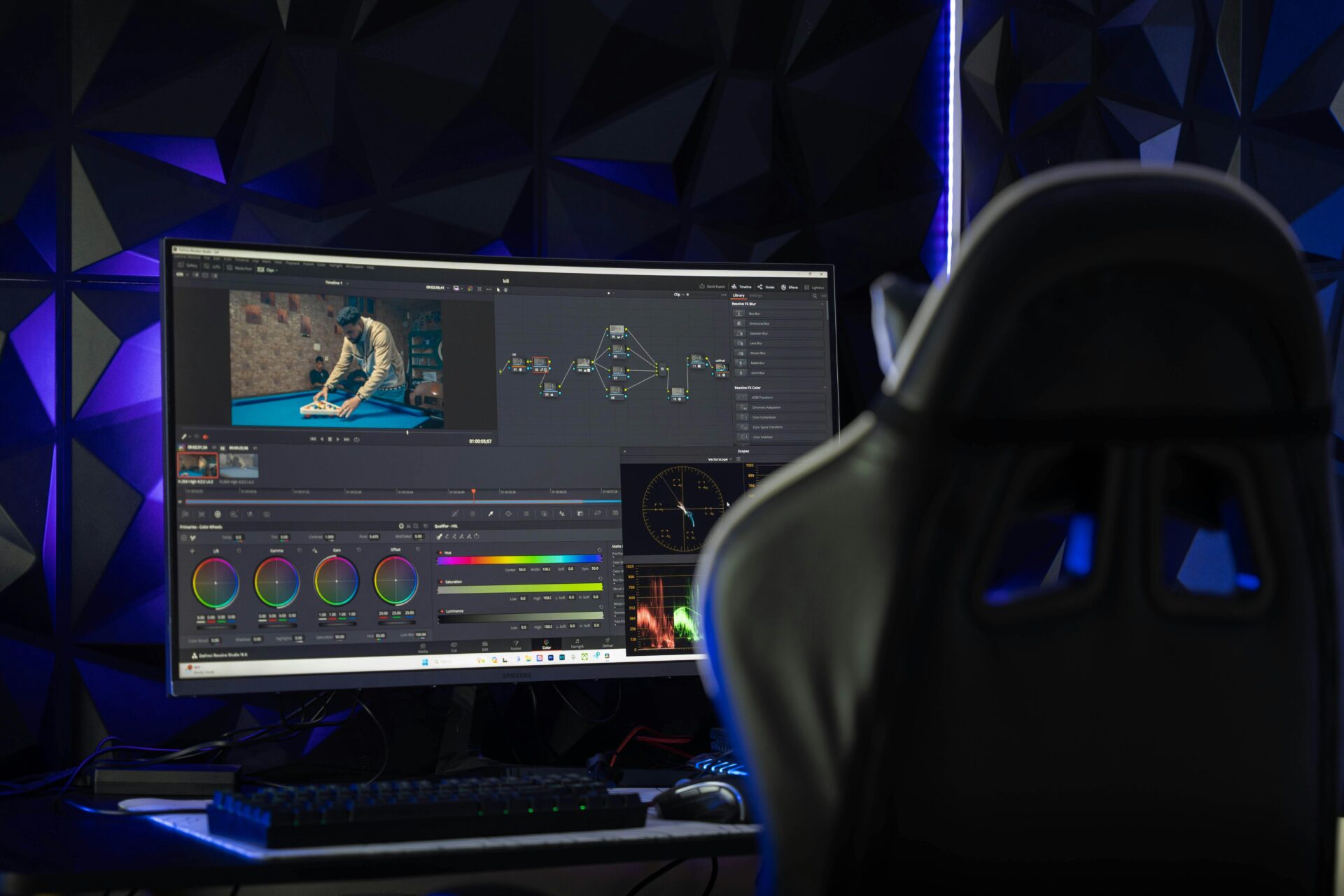

The Psychology of Color Grading: How to Turn “Footage” into a “Story”?
In the world of filmmaking and digital content, colors are not just aesthetic enhancements; they are a silent language that speaks directly to the viewer’s subconscious. Have you ever wondered why we feel dread in cold blue scenes or hope in warm golden ones? This is the magic of Color Correction and Grading.
—
## 1. The Essential Difference: Color Correction vs. Color Grading
Many confuse the two, but a professional knows the distinction:
Color Correction: A technical process to fix issues (White Balance, Exposure, Contrast) to make the image look as natural as the human eye sees it.
Color Grading: A creative process to give the video a “soul” or a “Look” that reflects the emotional state of the story.
—
## 2. Color Psychology and Storytelling
Every color triggers a specific emotional response, and a smart editor uses them as a tool:
Cold Colors (Blue/Green): Used to enhance feelings of isolation, sadness, or mystery (common in horror and sci-fi).
Warm Colors (Orange/Yellow): Convey happiness, nostalgia, or vitality.
High Contrast: Reflects conflict, power, and high drama.
—
## 3. The Golden Rule: Teal & Orange Contrast
Why do we see this combination in most Hollywood movies?
The reason is scientific: human skin tones fall in the orange spectrum, and the opposite color on the wheel is Teal. This contrast makes the subject “pop” from the background and creates stunning visual depth.
[Image: Color Wheel showing Teal and Orange contrast]
—
## 4. Technical Tips for Your Next Project
To achieve cinematic results, follow these rules:
1. Use Scopes: Don’t rely on your eyes alone; tools like Vectorscope and Waveform are your true compass for technical color accuracy.
2. Protect Skin Tones: This is the top priority; if skin tones look unnatural, the viewer will lose connection with the reality of the scene.
3. Consistency: Ensure all shots in the same environment share the same color “soul” to guarantee a seamless visual experience.
—
### Conclusion: You Don’t Grade Pixels, You Grade Emotions!
Color grading is the magic touch that transforms video from a mere recording of reality into an immersive visual experience. Mastering this skill means you hold the key to controlling the viewer’s mood and directing their emotions toward your marketing or artistic goal.A spirit unlike forms hard copy.
Simple gallery